Honoring the Past, or Ignoring the Reality?

Removing monuments is a sticky situation any way you look at it. This is also a very broad issue. For the purpose of this article, I will focus on statues pertaining to American wars. On one side, people feel the need to keep a physical testament to the, what they would call, proud, heritage of their forefathers. On the other side, people look at said symbols and it brings to mind horrible memories and stories of that same heritage oppressing people groups in violent, inhumane ways. Removing these monuments is an increasingly large topic of conversation in the United States. I, for one, advocate for the removal of all public monuments pertaining to American wars. I believe that they should be placed in museums. Those museums, no matter what they represent, should be respected by all people. Putting any and all monuments in museums solves the problem that people are forced to see offensive statues in their daily life. If one wants to “remember their heritage,” feel free to go into the museum. If one wants to honor the sacrifices made by people who faced horrible oppression, go into that museum. One case in Mobile, Alabama, displayed this idea perfectly. A statue of a confederate navy officer in downtown Mobile was moved to a local museum, and the Mayor of Mobile stated that she had no doubt that this was the right move. This allows people who want to honor that specific area of history to be able to do so, without shoving it in the face of everyone in the city. The article containing this story had many other stories in which removing offensive monuments and relocating them to museums has been a great success. I think this is a good way to compromise. Unfortunately, history is offensive, whether one likes it or not.

Reference:

“Where Have Statues of Confederates, and Other Historical Figures, Been Removed?” Los Angeles Times. Los Angeles Times, June 16, 2020. https://www.latimes.com/world-nation/story/2020-06-16/confederate-statues-removed.
Monuments and Memory

In more recent years, the status of monuments has often been the hot topic of debate. Applied to statues and monuments across all eras, the discourse mainly focuses on events and figures that can be considered “controversial” due to behavior of belief. Though the movements mainly focus on specific figures, normal citizens often get caught in the cross hairs. In the town of Abingdon, located in Washington County, Virginia, one of these monuments has recently been the subject of town debate.

Abingdon itself is a historic town. Many of the buildings in Abingdon pre-date the Civil War and stand testament to the city’s role in the American Revolution. When entering the town, the historical identity is one that is extremely prominent. The monument being challenged in these debates stands in the courtyard to the Washington County Courthouse. Originally constructed in 1800, the Courthouse fell victim to a Union raid in 1864 and burned to the ground. Four years later, a new building was constructed and in 1907, the memorial to Confederate veterans was installed.

A-11. Confederate Monument, Abingdon, Va. - Digital Commonwealth

In the midst of recent debates, I have held the position that the memorial should be relocated. Near to the monument site is a historic cemetery with a section dedicated to Confederates. A short distance from that is a newly established park honoring the region’s veterans across all wars. While I still hold that opinion, I can understand some of the arguments as to why it should stay. Unlike some places in the region, Abingdon does not flaunt its Confederate history. If anything, it seems stronger tied to its role in the American Revolution. Many who want to keep the monument in place argue that removal is erasing history. Due to the historical nature of the town, removing it would not be “removing history”. The monument is not celebrated and often is passed by with little thought even though it is in the center of downtown. The best argument for keeping the monument is an argument I have yet to see made. The monument’s current position is highly symbolic. Even if not intended, it stands to honor those protected and defended the courthouse that was burned to the ground over a century and a half ago. While I fully understand the reasoning for wanting it to stay put, I can also say that its purpose of being a memorial is best suited in another location. A monument to honor those who risked their lives for the county deserves to stand either the veterans themselves or a place dedicated to honoring veterans.

Government and Royal: The Place of Confederate Monuments Today

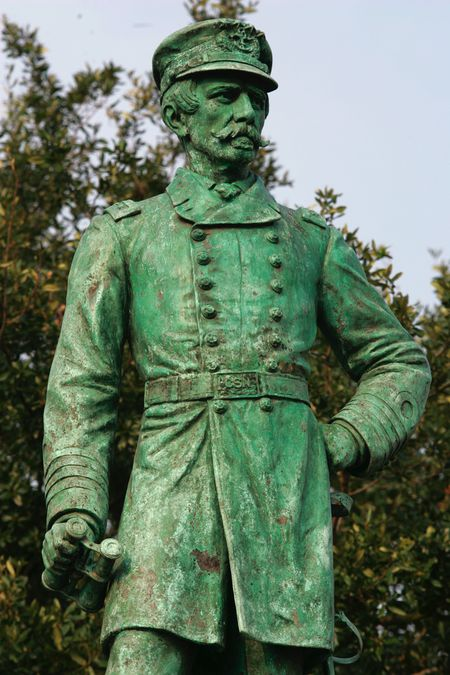
In the dead of night of June 5, 2020, the city of Mobile removed the statue of Confederate Admiral Raphael Semmes from the intersection of Royal and Government street in the heart of downtown. The monument had stood for around one hundred years, unavoidable at one of the most prominent points of entrance into the city. Mayor Stimpson announced it would be moved into the Mobile History Museum next to where the statue stood. Now is the trickiest phase for the city as they have to balance the careful considerations of how to communicate the city’s history.

 Mobile was right to remove the Semmes statue from its place in the landscape of public symbols, where it was part of a concerted effort to communicate a Lost Cause vision of the Civil War in the city’s public spaces. The current history museum was the city hall when the Semmes statue was erected. Confederate statues cannot be contextualized where they are, as their entire placement was to deliberately influence the way the public thought of their shared history. Semmes is inarguably a part of Mobile’s history, the chief player in her important chapter in the Civil War, and the namesake for a large suburb of the city.

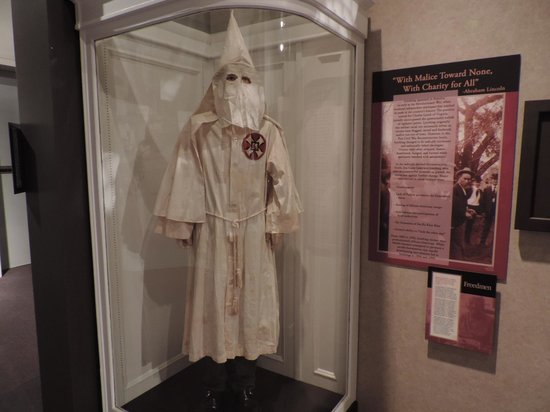
However, this statue is not Semmes and its place in history does not belong in the Civil War section of the museum, instead it belongs in the area dedicated to Reconstruction and Jim Crow. Its place is not back on another pedestal as some magnificent centerpiece in the section devoted to the Battle of Mobile Bay. This statue was made long after the end of the Confederacy and the death of Semmes, it should be contextualized as a part of the Lost Cause revisionism championed by white supremacists in the city. It should be on the ground next to a similar symbol of the period, a Klan robe. Both are reminders of how white supremacists, secure in their belief of the justness of the Lost Cause, ruled Alabama and systemically oppressed black Mobilians.

Barbara Dismukes Monuments post

“What should we do with historical monuments if they’re removed?”

            I think that historical monuments should be left where they were placed.  Taking them down does nothing to change history.  These memorials are reminders of things that happened in the past and should be looked at in this capacity.  Not all of the memorials that are in cities are considered to be “racist”, but in today’s world that is exactly what is happening.  These memorials should be telling their own stories of history, what happened and how we can avoid it happening again.

            If memorials and statues are taken down, I think they should be placed in museums for people to learn from.  Destroying them is stupid and wasteful.  History is what it was, it can’t be changed, removed, or erased.  Showing our children and grandchildren how our country has changed and bettered itself is part of history and should be taught, not hidden.

            Hopefully, we as a Nation, have learned from the mistakes of our forefathers and will continue to grow together as a nation who is loving and caring and can see people for what they are and not the color of their skin.  Looking at someone’s color shows that people are ignorant in their thinking.  What truly matters is what is in someone’s heart, not their skin color.

            I don’t believe we need to “interpret” monuments.  They all clearly state who the person was and what made him stand out.  Not that anyone has to agree with what they were honored for, but at the time they were celebrated, people were proud of that and thought they did something good to deserve that honor.

            Hopefully we can all learn from history, the good and the bad, but looking at the young people today, they are making bad choices in how they act, treat people, and other people’s property, much like the things that they are complaining about that happened to their ancestors!

            Removing or destroying monuments and statues is like shutting the barndoor after the horses are out!

Monuments – Symbols of Hate or History?

In considering what should be done with monuments in the present, hostile environments toward what many perceive as symbols of hate, a case by case decision process seems to be the only thoughtful methodology. Competing factors such as public versus private land, local political power in the hands of liberal or conservative interests, and laws banning removal of statues create obstacles in even broaching these issues in many areas. For example, in Birmingham, Alabama the removal of the Confederate obelisk near city hall and the courthouse after protests and significant damage prompted the state’s Attorney General to threaten hefty fines for removing the monument. But at what point do citizens’ desires to change their local narrative overrule these antiquated laws?

In the case of the Confederate General and Ku Klux Klan founder Nathan Bedford Forrest, the statue depicting him in Memphis was removed in 2017 while another cartoonish caricature of him remains protected in Nashville on private land. Complete removal, however, creates a missed opportunity for education and contextualization. There is much to be learned from the time period a statue was commissioned and by who as there is from the statue itself. For example, free blacks in Wilmington, North Carolina created a community for themselves and successfully integrated into local politics. After blacks were violently pushed from the city in 1898 through intimidation, lynchings, and voter suppression, white supremacist rule retook the city. Multiple Confederate monuments were erected in the coming years, retaking the town unequivocally for whites.

Nashville Statue of KKK Founder Nathan Bedford Forrest, Vandalized

By simply removing statues from places like Wilmington, this important dialogue would be completely lost. Relocation from public, government grounds, however, remains imperative. Museums and battle fields become appropriate settings for relocation, where contextualization can provide insight into the who, what, and why of each monument. New plaques can be placed with these statues indicting their original location and give readers information on why it came to its new location. These removals will take these monuments out of a spotlight for celebration and into an environment of reflection.

Monuments and the Public

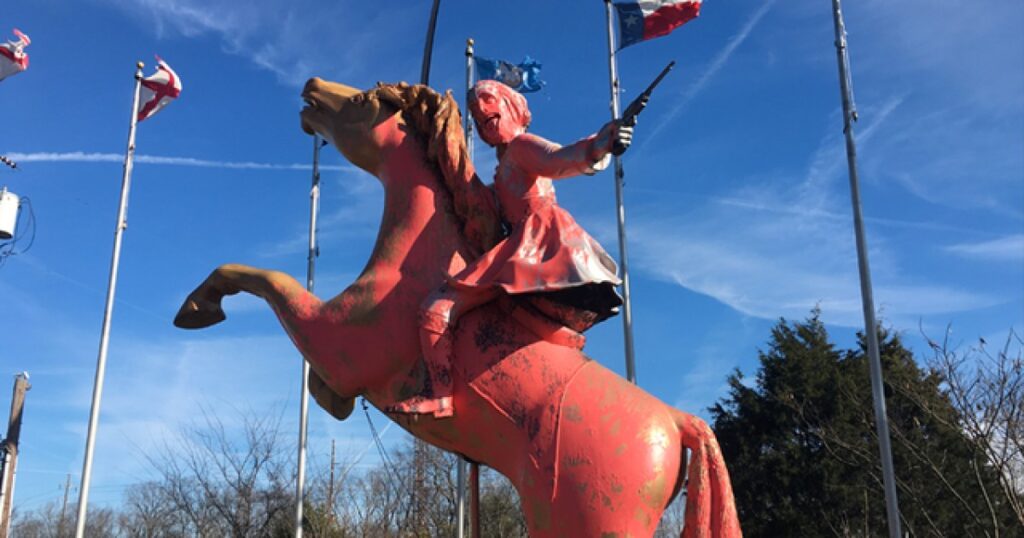
Monuments serve as reminders of the past and are often used to elevate people of the past, but without context they’re just statues. Many of the monuments in the South are dedicated to the Confederate Army and the men who died for the Confederate cause, but few try to name the men they represent or contextualize themselves. These monuments have sparked backlash over their placement in public squares and often their meanings are debated to the point of anger by both sides of the political aisle. All Monuments have good and bad aspects, humans by nature are flawed and all monuments made for human achievements are subject to scrutiny for the people and ideals they represent. No two people have the same experience in life and because of this every person is different and has values that make them support certain points of view while renouncing others. This leads to mixed support and opposition to the removal of controversial memorials, with both sides grasping for moral superiority. One of the recent controversies was of the California statue of Saint Junipero Serra, he has been called a supporter and oppressor of native peoples and during a protest his statue in a local park was torn down and painted red. The unauthorized removal led to people on the right demonizing those at the protests and the present organizations. There are a plethora of solutions for monuments, but I believe the least controversial way to deal with them would be the mass decentralization of them all away from public spaces to relevant historical sites and museums, because many monuments that spark similar backlash exist in areas where they serve no purpose in teaching the area’s history. Monuments should be used to teach about the past, without proper context they fail to do this, so we should find a way to use them rather than demolish them.

Removal of Historical Monuments

In this tumultuous period, questions of historical monuments spark considerable debate among the population, urging matters of how the removal of certain statues should be handled. Although most call for the destruction of monuments venerating white supremacy and the oppression of minorities, there may be more that could be learned from the relocation of particular objects than from outright destruction. Historical interpretation is essential to represent when learning about the past – what better objects to understand historical interpretation than a monument?

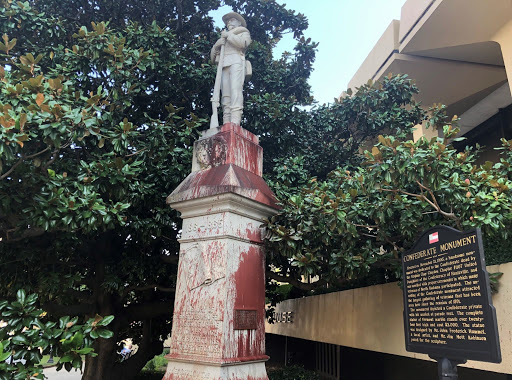
defaced Confederate monument; Huntsville, Alabama; August 5, 2020; source: AL.com

Since the George Floyd riots began earlier this year, the Confederate soldier statue residing outside of the Madison County Courthouse in Huntsville, Alabama, has been vandalized with blood-colored paint. Although there have been claims that it will be moved to Maple Hill Cemetery, the Memorial Preservation Act has left it standing in the center of town. Moving this monument to the cemetery does relatively remove it from the public eye; however, a more poignant statement is made in the lack of cleaning attempts that have been made since is defacement. If the statue were to be removed in its present condition, it becomes an even more versatile object for special collections. Both the art museum AND historical museums (like the Space and Rocket Center, which often houses temporary exhibitions) could facilitate contextualization of the statue.

As parts of the landscape in many cities, Confederate monuments prove problematic in their promotion of white supremacist narratives of the Civil War. The destruction of these symbols of oppression is understandable and needed, but the preservation of a few statues could prove to be beneficial in reshaping the effects of the post-Civil War South. Although impossible (and unnecessary) to save EVERY object, historians could work together to identify the most significant ones and preserve them within local archives or even storage spaces of museums. Issues of space at the museums and framing of the artifacts pose the biggest problems of this approach toward relocating the monuments, but this could be an important step for future historians eager for primary sources on the erection of Civil War monuments during the late 19th and early 20th centuries. While controversy is possible and probable when considering saving these artifacts, some of the heat could be diverted by leaving the pieces in storage or creating temporary exhibits using the monuments (or parts of the statues, since they are rather large) as centerpieces for a larger, contextualizing story.

Fall 2020 Welcome

This is the blog feed for HIST 5810/6810, Fundamentals of Public History at Auburn University. You’ll be using this space for weekly assignments throughout the semester (there’s more information about this on our syllabus.) You should check this space frequently to reply to your classmates’ posts—all the more important in the midst of a pandemic where we won’t have the same opportunities for connection and conversation. There are instructions for how to make posts and use this blog on our Canvas site. (Note–this is an external WordPress based site embedded in our Canvas. You can see the site at publichistory.elijahgaddis.com.)

Pebble Hill

The house is less of a historic house museum and more of just a house that has history. Honestly, I think they should either really dedicate some time and energy into introducing period pieces that have a sense of cohesion and story than just an assortment of furniture that the donors don’t want or don’t mind parting with. I think the anarchic approach seems the most logical unless there is a significant change of heart with the donors.

The possibilities really are endless if they decided to take a more anarchistic, public-oriented approach. Plus, I think one could convince the donors that the more people that come means more people appreciating the house which may eventually lend itself to them being more generous. I think a very interesting and easy idea would be to use the new building to teach a class like Public History or for Dr. Noe’s Civil War class. It could also be a great spot for graduate classes since a lot of grad students tend to commute and it has easy parking. It would be wonderful if they could use it as a study space during finals/a normal workweek for the surrounding apartments. They shouldn’t underestimate the power of convenience in the average college student for things like this. I also think that a nice little coffee or food truck could be placed there during the week simply to draw the surrounding college students and business people there for lunch or dinner on a pleasant afternoon or evening. Plus the use of food truck wouldn’t tie the house to a specific restaurant and the food trucks could be interchanged for necessity or variety. I could see it being home for small art shows or concerts because it has a good spot, being right on the border of communal/family living, for connecting college kids with the parents and real people that actually live in Auburn. Plus a lot of this could take place on the front lawn, in full view of the house and highly visible for passersby to join the fun. But the house doesn’t really feel like it has much to say from a historical perspective. Yes the house has history but it doesn’t feel all that connected to the history because it’s not furnished in an original period and the history of the house isn’t terribly compelling. I think they are better served getting to appreciate the house as a more abstract representation of our past and as a unique and somewhat rare example of antebellum architecture (I can’t remember exactly what style it is). I don’t see much correlation between its historic interpretation and its current use. I’m also not sure there is much, if any obvious historic interpretation being presented by the house.

A public historians responsibilities

What are a public historians responsibilities? A good question especially in today’s less than friendly political climate where any thing and every thing is a controversy to some one no matter how careful you are to be controversy free and try to please every one. Or as the situation for historians is best described by Cathy Stanton in her rephrasing of Shakespeare ” some public history work is born political, some becomes political, and some has politics thrust upon it”. After reading her post “Hardball history: On the edge of politics, advocacy, and activism” I get the feeling that she is arguing that the public historian has a responsibility to side with and support certain controversies with their scholarship and academic background and for the most part I agree… to an extent, we do owe it to scholarship and the public to inform and teach as much as we can about certain controversies and to dig up and present as much information as we can about the history of issues, but we have to be careful as historians to not go past the line of historian and into that of trying to be a politician. We have to separate our history and our scholarship from political advocacy lest we fall victim to having politicians and other interest groups twist and corrupt both the historical scholarship that we have worked so hard to present and the historical memory of an event to suit their political agenda. There are to many sides and angles with in the political world all angling to try and get one foot up on the other, we shouldn’t let history become a casualty of such political one-upmanship for this is how history itself is erased and simply becomes another tool of oppression. It’s one thing to say ‘oh well I’m not worried about that, the current government would never do that, they’re on my side’ but that’s the thing about government, the people in charge change, just because they’re on your side in one election cycle doesn’t mean they will be the next time, so giving the tools of history to be politicized to one election cycle means your giving it to all of them. History and public historians have a responsibility to the public to pull history out of the political quagmire and show to the public ‘hey look, this is how it really was’ with out any political spin or agenda attached. Public historians have the unfortunate responsibility of having to walk the tight-rope of historical truth, political advocacy, and public opinion. That isn’t to say in small doses or when properly balanced any of these things are necessarily a problem far from it, they’re quite good things, it’s just when historical accuracy and scholastic integrity is sacrificed at the altar of political agenda that problems begin to arise. We have to be careful not to become that which we fear and that’s all I’ve got to say on the matter.