Ask a Public Historian – Ty Malugani

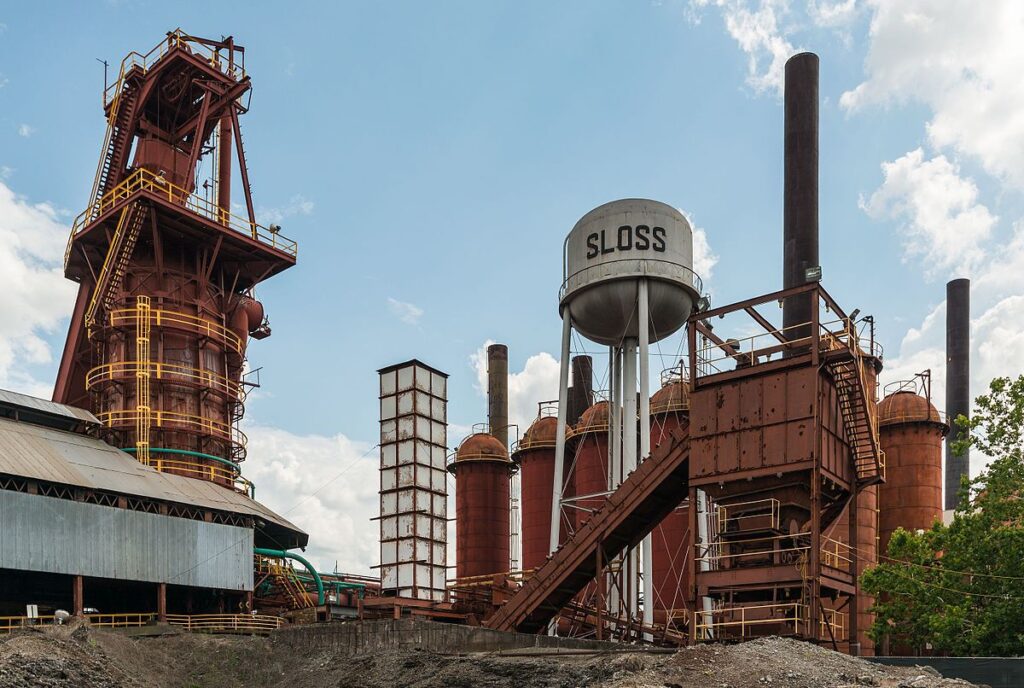
Sloss Furnace, Birmingham, AL

Ty Malugani – Education Coordinator for Sloss Furnaces National Historic Landmark, tyler.malugani@birminghamal.gov

1) What led you to the job you have now?

I have always been interested in history and I came to Birmingham to get my degree at UAB. I had never really been here before, so I started visiting sites around the city including Sloss and I just fell in love with the place. During my, I think my Junior year, I did an internship at Sloss and started giving tours and getting to know the site. I then volunteered, and then did another internship during the master’s program, and then volunteered again. When the job opened up, I just sort of jumped at it.

2) Did you always want to do public history over academic history?

That’s a good question. No, I didn’t know at all. It was one of those things, where I grew up going to museums and I loved it. Throughout school, I wanted to be a high school history teacher because I thought of all the terrible history teachers I had. Then I got to UAB and through teaching as a TA and just being there I thought maybe being a college professor, but after experiencing public history I saw that I could teach kids, but not all the time. I could teach and be involved in other things. Public history could give me bits of everything I liked. So, not until my master’s did I sort of buy into this idea of public history.

3) What is your favorite project you’ve done at any site you’ve worked at?

As weird as it sounds, and I know it’s weird, but probably cataloging all of the Birmingham postcards at the Vulcan. That is where I found that I liked working with artifacts and touching the history. Also at Oak Hill I got to develop the accession system and worked on accessing the books, which hadn’t been done there yet. For Sloss, I currently am working on developing virtual tours and stuff like that and it’s really, really fun. But, the Vulcan project is one of my favorites when I think about it. I found I lived developing systems and being hands on and organizing stuff even if it’s a lot of just sitting on a computer and entering data. It can be pretty fulfilling. I thought of the night tours at Sloss, too, but those can get pretty corny, so yeah, I think just the cataloging.

4) What are the pros and cons of your job?

As far as the pros go, to me, like I said, I really like being able to teach, but not all the time. I get to work on other things. I get to have my hands in all kinds of things, teaching kids, developing programs, continuing research, handling artifacts. To me, working in a museum is basically like being able to do what I think is the full scope of history, which is all of those things. There is also the constant challenge of having to figure out how to best portray information to the public, but this is also a con. The public has to understand on their own, without me there to explain to them, what I am trying to get across. And of course, that Sloss isn’t just a haunted place. It’s a museum with real history. Also when I come up with programs, there has to be funding and especially now that’s even more difficult with a tight budget. I have to figure out how to make programs cost effective. Oh, and with teaching you get breaks, with museums, especially when I am working on a new project, I get calls constantly, so It becomes pretty time consuming.

5) What advice would you give to someone who wants to get into public history?

Volunteer, intern, volunteer, intern, volunteer. You have to get your foot in the door. It’s somewhat unfortunate, but museums require so much experience to get a job, so you have to get to these places and make yourself known. In Birmingham, I wanted a job so I spent time at all the sites volunteering. You also need to network, when you put that application in for a job, you want them to already know who you are. You have to put yourself out there. This is what worked for me.

The Presence of the Past

Since I had administered this Presence of the Past survey to my roommate, I thought it would be an interesting idea to make some comments about it. in the survey, there were quite a few questions which are on the spot by asking my roommate to think about the past, both in his family roots and in his leisure time what he had done and what he had missed. Then pick out a favorite moment and savor it. Questions like this one can not only immerse us in our memories but also teach us the moral of remembering who we are and where we are from. As habits in a person’s life could often influence their perception of the world and lifestyle.        However, something else did caught my attention as there are some imperfections to this survey. There are specific questions asked about African Americans and Hispanic Americans, but the Asians seemed to be the one left out. Another issue worth mentioning is that in the end of the survey some questions are just too sensitive to certain people. Such as asking how much their family made within a year. What I would have done is add questions for Asians while asking about basic information about those candidates. Such as name, school, favorite movie etc. That’s all I can conclude about the survey.

Zongru Han

Social Media, the new history classroom for Gen-Z

One of the biggest problems in the survey is most of the questions were out dated. Most of people do not read a book about past for personal pleasure. My roommate, who is a cs student, has no interest to read any books about any kind history. And for almost one year, the only “historical” movie he watched was the “1917” film I rented. It is easy to understand, what history or past can help him to develop a computer program. However, because of Twitter and TikTok, and the BLM movement now is taking all the headlight, he told me he did learn a lot of African American history in the past few months via all the short videos he watched on the social media. So from my experience, add a question like “where did you learn your history lessons” could be up to date. And I can guarantee many of the answers would be “youtube,” “Instagram,” “tiktok,” or any kind social media we may know or not know. And I will not surprise that very soon there will be people telling me “Soviet caused the WWII.” (From the recent Call of Duty trailer, I feel that can be happened very soon.)

Presence of the Past Blog

I feel that these questions were on point. They were well thought out and pertinent to the survey that was being done. I did think that more could be asked about their family life, children, grandchildren, etc.

Also, interestingly, there were few questions about DNA and testing. The results of these could be detrimental to someone learning that their whole life was not what it seemed. Learning that your parent (father) wasn’t your birth father could be very emotionally damaging to someone. I have lived this scenario and it wasn’t pretty. My mother and father were both deceased when I learned this fact, so I couldn’t ask the questions that I needed answers to. I did have my siblings, but they weren’t talking and were not comfortable telling me that they had known for years but didn’t want to hurt my feelings by telling me the truth.

Asking questions that have hard answers, not only about public history, but about someone’s personal history should be done to record people’s feelings and thoughts about a certain time and place. Having these records brings a more real feeling to the reader and could possibly change the outlook of the person doing the reading or history.

Surveys

The process was familiar to me, I did a similar survey about a year with my old roommate.  I asked similar questions about his background, and it was also history related.  But it was more about the list of things that he watched or heard regarding history. For example, what museum you last visited, last history documentary he watched. The process was the same, the survey went smooth for both individuals, they were both similar to my age I think that helped a lot. The first survey was simpler than this one, the questions asked was more direct, it did not need explanation. This survey requires the person to elaborate on some questions, some of the questions require you to not only give an answer but explain your reason why you gave it.  The only problem I ran into with survey was the person I interview, he did not been to recently been to museums or read any book regarding to history. Overall, I would not change the survey, I felt it was a good way to see what we are learning as far as history, not only our preferences.

Surveying the Past

This was my second time doing this survey, the first time I believe I interviewed my Dad and remember having to explain a lot of the questions to help him understand the meanings of some of the questions. This time I interviewed one of my coworkers at the Home Depot, someone a bit closer to me in age. The interview went about as smooth as the first time and I think the main issue is the wording with a few of the questions. The shorter questions are easy to read and answer, but the lengthier questions required a bit of explanation. I had a similar issue last time. I also feel to make results easier to collect, the questions could be put into a Google Survey to help limit answers on yes or no questions and provide options on questions that seem too open ended (i.e. the part 2 of Q1, on Section I). My father was a bit quicker on this question because he liked older movies and they served to remind him of the times when he was younger watching them, but my coworker had a bit of trouble answering this question because he has seen a lot of movies set in the past and he said all movies are about the same to him. That part of the question could be reworded away from using “like”; the word “interest” would be a better here . Also I feel that COVID-19 has affected a few of the questions in a way that may skew results if it’s not stated that these result were taken during a pandemic.

Presence of the Past

I think this survey did a great job of helping our subject really begin thinking about how history is intertwined into everything we do. It helped me show my roommate that a lot of what he interacts with on a daily basis has a historical background. My roommate’s view of history was simply a terrible class in high school and nothing but boring facts about events that happened long ago. By participating in this interview, he was able to understand that the field of History has depth and there is a niche for just about everyone. I found it interesting that he found teachers to be the most reputable source of history, which I tend not to agree with. It was really nice to see an in-depth perspective on what history means to someone who isn’t in the major, field, or really even likes it. For the past couple of years now, most of my time has been spent with history majors, so I don’t get to see too much outside perspective. I believe that the biggest change necessary with the questions, is just an update to a few of them. Maybe throw in some more questions relevant to today’s world. Ask more in-depth questions. Ask more about social justice – or lack-thereof. A slight update would make this survey quite good. Overall, though, I thought it did a great job at having interviewees engage and think about how history is interwoven in everything and that it truly is a fascinating subject.

Presence of the Past; An American from Russia

For my oral history, I interviewed Natalie Beckerink, an Auburn student who grew up in various parts of the U.S. but was born in Russia. Beckerink was adopted by American parents at an early age, so I was really interested to see how she understood her place in her parents’ past.

For that reason we ended up spending more time on the questions about her relationship to her family’s history than the others. It was really interesting to hear her talk about finding a sense of community in a shared American history despite not being “genetically American” herself.

From this, I think we can make a few interesting observations about how a person’s perceived past often has a lot more to do with their worldview than it does their DNA. For instance, while Beckerink expressed an interest in finding out more about her biological parents, she was much more concerned about the history of her community and the U.S. than she was with that. Also, Russian history never even came to the conversation. If a lot of far-right-wing theories about genealogy and culture are correct, we would see people like Beckerink place a lot more emphasis on the cultures where they can trace their genealogical heritage. But we don’t see that. Instead, history as a shared understanding of the past seems to be more closely related to upbringing and cultural heritage.

Perceptions of the Past

For the survey, I chose a close friend of mine to interview. Currently pursuing an undergraduate degree in psychology, I know that the subject has taken several history classes and is interested in history. This interest gives the interviewee a knowledge base that could contribute to the conversation without being too knowledgeable. Overall, their responses were not surprising. As they live in a small rural environment and the responses reflected the culture of the area they live. When asked about what was important, family history as well as first-hand experiences and oral history. This reflected when asked about the accuracy of historical media. In their responses, they showed fair levels of trust in first-hand experiences, museums, collegiate professors, and academic books, but doubted the other forms.

Overall, the survey was very straightforward and concise. There were areas that promoted further discussion, but some allowed more room for dead ends. This is a common occurrence in broad surveys and not surprising but, in this instance, it did not have much impact on the interview. Even if in another case the conversation did fall flat, I could probably still use the information as that area probably meant less to an individual; which is a data set within itself.

While the survey is good for developing a wide view of individuals’ perceptions of history, one of the things I like about the survey is how it can be easily tailored just by placing emphasis on certain categories or by asking more follow-up questions in a particular section. My biggest concern with the modern use of the survey is the change in time. Since the survey was first published, a lot has changed in the world in regard to the types of available media and how the media is culturally perceived. Specifically, social media and video games. I personally interact with several historical based social media pages and well as play a fair share of historical based video games. The modern “meme” culture also plays an impact on the accessibility, and exposure, to history that many see. If I were running this survey as a member of a historical site or a museum, I would also add follow-up questions about historical sites other than just the occasions that the subject has visited them. These questions could be from the use of technology, the perceptions of “modern” versus traditional experiences, to even something such as perceived relevance of these types of institutions.

Presence of the Past, Surveying my Mom

Using the Presence of the Past Survey questions, I interviewed my mother who has about an average level of exposure to history. My first impressions were that the survey does well in being clear and concise, but it proved a difficult survey due to the writing of the questions. Usually, questions should give the interviewee the opportunity to speak and carry the question in a way that gives more information, but some of these could be answered with just “no,” halting conversation. This could be more or less problematic depending on who is being interviewed, however. I also found them to be out of date, but with some updating to account for new ways of interacting with history through technology, digital exhibits, etc., the survey could be greatly improved.

Overall, this survey does provide a useful sample of information about how often or in what ways individuals interact with the past. For example, if I use my mother’s answers as an indication of how I should guide an exhibit or even what kinds of historical sites she would most enjoy, I would focus on more modern sites that utilize technology and video rather than just text and objects.

Looking back over the questions and answers I received, I generally found the questions related to the trustworthiness of the past to be the most effective. In this section, one question that could easily be added to help modernize the questions would be, “How trustworthy do you think social media posts on history generally are?” We often see “history” shared through social media sites, regardless of its validity, so this question would provide a good indication of current attitudes towards that. Even though I was not surprised by my mother’s answers, I think in a normal survey situation where I wouldn’t know who I am surveying, these questions can give the best indication of how people perceive history and the most impactful modes of delivery. Everyone learns and interprets differently, so a sample of these questions could provide valuable information on how people think about and internalize the past.